Primacy of the Sacraments
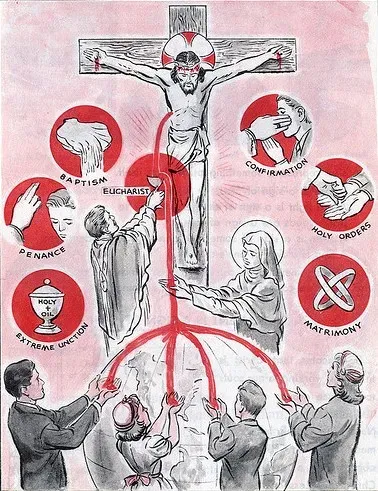
I have been reading a diversity of books this summer that have either been recommended to me recently or have been collecting dust on my bookshelf. With a lot of these, I am reading them just to check a box and be done with them.
One book that I was not expecting to love as much as I have is called "General Principles of Sacramental Theology."
Enthralling title, I know.
This book was assigned to me for my Introduction to Liturgy and Sacramental Theology course, but we got so far behind schedule that we just omitted the sacramental theology portion and added it onto a later course. Regardless, I bought the book at the beginning of the semester, and I figured that it would be a helpful read before I take a Baptism and Confirmation course this upcoming semester.
The latter half of the book is filled with typical academic theology that makes tons of nerdy distinctions and shares the pros and cons of different ideas throughout the life of the Church...
The first half, however, reads like one of the most convicting Substack posts/sermons I have ever encountered. Chapter after chapter, the author acknowledged all of the errors that I had previously believed about the sacraments, explained their weakness, and presented the contrary, correct teaching; it is quite similar to the style of the Summa Theologiae.
The biggest temptation that I think a lot of modern Catholics (and myself) fall into is that the Sacraments are merely seven of a large set of tools in God's toolbox to save His people. In this view, one may think that a weekday Mass potentially disposes somebody to less grace than if they were to attend a praise and worship session instead.
Unfortunately, this is how I used to think
I used to get so pumped up to attend praise and worship nights at a certain retreat center... iykyk...
At some point, I wanted to make sure that I had the most "powerful experience" possible there, so I would go to confession to ensure that I had a clean soul; in theory, this would increase the chances that God would "rock me."
If only I had this attitude for receiving Our Lord's Body and Blood in the Most Holy Eucharist... Apparently the Eucharist wasn't enough for me... I was chasing consolation from God, not the Cross which would sanctify me.
Fortunately, God is so exceedingly generous, even while we are blinded by falsehood. On multiple occasions, He actually did pour Himself out to me at these events. It was in this exact context that I heard "the call" to leave behind my career path and follow Our Lord into the seminary. What a grace!
Anyways, getting back to the book, here are a few quotes that really called out subtle errors that I subconsciously submit to:
"Since Christ's passion preceded as a kind of universal cause of the forgiveness of sins, it needs to be applied to each individual for the cleansing of [particular] sins." This applicaiton of the universal cause to teach individual is made, Aquinas explains, "by baptism and penance and the other sacraments, which derive their power from Christ's passion" (p. 37).
One of the unfortunate outcomes of the contemporary penchant for marketing spiritualities appears in the commonly held view that prayer serves the personal needs of the one who prays. People develop prayer techniques that help them get through a tough day or a difficult period. Within Catholic theology, scant warrant exists for making prayer this kind of theraputic or palliative exercise. Because prayer constitutes an act of the virtue of religion, God — not man — becomes the first beneficiary of man's prayer (p. 43).
The sacraments are, as a result, not institutional impediments to friendship and intimacy with God in Christ. They are, rather, the very place that Christ established in which he himself remains with the Church "always, to the close of the age" (p. 45).
Since, therefore, the sanctification of man is in the power of God Who sanctifies, it is not for man to decide what things should be used for this sanctification, but this should be determined by Divine instiution. Following 1 Corinthians 6:11, which declares of Baptism "you are washed, you are sanctified," Aquinas concludes that "we must use those things which are determined by Divine institution" (p. 69).
As a future minister of the sacraments, how much more awe ought I to have for all seven of the sacraments?
The sacraments are not mere, antiquated hoops that the Church asks us to jump through in order to remain in good standing with Rome. The sacraments are the foundational, primary way that we ought to encounter God in our lives!
I have written extensively on this blog about the importance of centering our lives on uniting ourselves with the Holy Sacrifice of the Mass. When we go to Holy Mass, if the priest isn't "engaging", the music isn't sentimental enough, or the Scriptures mention that "outdated doctrine" about the judgment of God, how do we react?
If we can't take away spiritual nourishment from a well-executed liturgy that directs our aim towards God, then maybe we need to look in the mirror and ask, "Who is my prayer for... Me, or God?"
I recently came across the icon of the Ladder of Divine Ascent. I think it speaks beautifully to what I am trying to get at.
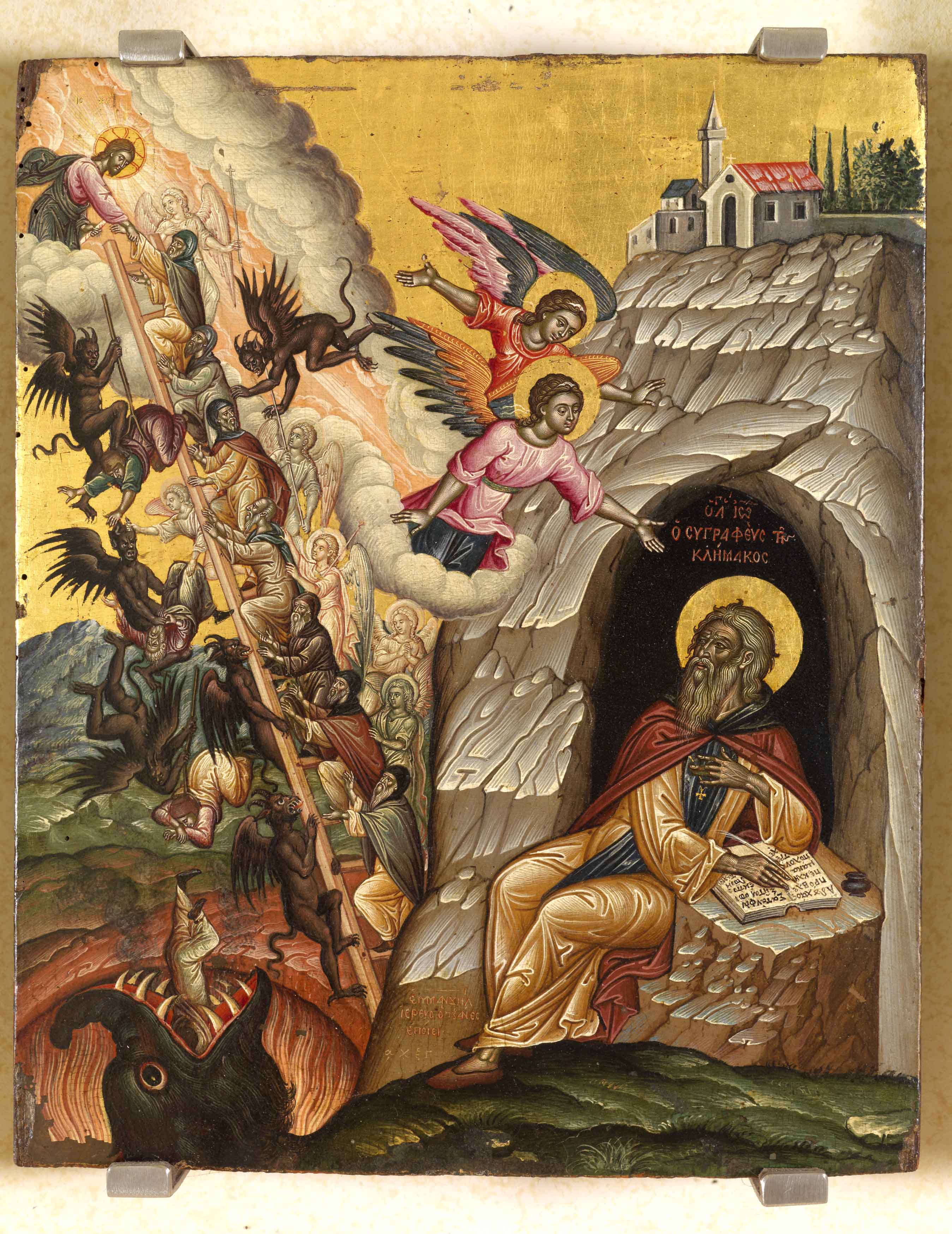
In this image, we have the angels, the demons, the dragon from the Book of Revelation, Our Lord, and the Church Militant (us). There are two destinations for us to endure all of eternity...
Eternal flourishing, awe, wonder, intimacy, and unity with Christ the Bridegroom
Or...
Eternal damnation... where we won't even be remembered... do you see any souls in Hell in this image? Me neither. Based on the man being chewed up in a mockery of Jonah the prophet, there are plenty of people who have followed that same path.
Each of the thirty rungs of the ladder, from the original text of St John Climacus, represents a different imperfection or vice that we need to be purified of. Climbing a ladder is easy for a few rungs, but how many of us have climbed three stories on a ladder? Most of us can stop a few obvious sins like manslaughter or stealing from our neighbor... but how many sins are we willing to let go of?
Ask yourself: how many of these am I guilty of?
- Disrespecting those in authority over me...
- Their power comes from God himself. cf. Romans 13
- Complaining for the sake of "venting"
- We ought to endure our sufferings with joy, not anger or gossip
- Self-centeredness in conversation
- How often do I put zero effort into remembering the name of a person I just met?
- Placing good things on a pedestal above God
- I am looking at you Cleveland and Ohio State sports fans
- Replacing my duty to pray to Our Lord with books, videos, podcasts, or even real conversations that merely talk about Him.
- How often do I merely think about holiness? Why not actually allow God to make me holy instead?
- Not coming to prayer
- I want to read just one comment or article online...
- Seeing this image/call to holiness, and ignorantly falling into the heresy of Pelagianism
- Do I think that any holiness I possess is exclusively the fruit of my own work rather than the work of God? cf. John 15:5
- Not removing unessential things in my life that are sources of temptation
- Friar Anthony: "It's always those dang phones!!! If you want holiness, just go out back and shoot your phone! But you won't... because you'd rather take pleasure in your ugly, sinful passions rather than suffer your Cross from Christ and let Him make you holy..."
- Shoutout to the Marian Friars Minor. I recommend their spiritual conferences if you enjoy some zealous, fire-and-brimstone preaching.
- Want control over your phone? -> Shiftyourphone.com
- Want control over your computer? -> getcoldturkey.com
- If technology is a problem for you, is your salvation not worth $200? We will spend hundreds of dollars on Catholic conferences without even blinking. Your parents, friends, spouse, and children will thank you later.
- Friar Anthony: "It's always those dang phones!!! If you want holiness, just go out back and shoot your phone! But you won't... because you'd rather take pleasure in your ugly, sinful passions rather than suffer your Cross from Christ and let Him make you holy..."
Finally, it is worth pondering: where did the ladder come from?
Humans can't build anything that takes us to Heaven. We already heard what happened with the Tower of Babel.
The enemy certainly doesn't want us to go to Heaven; why would he put Christ at the end of it?
Therefore, this ladder must have come to us by the will of God! And what exactly is the way that God plans to make us holy? The Sacraments...
Since, therefore, the sanctification of man is in the power of God Who sanctifies, it is not for man to decide what things should be used for this sanctification, but this should be determined by Divine instiution. Following 1 Corinthians 6:11, which declares of Baptism "you are washed, you are sanctified," Aquinas concludes that "we must use those things which are determined by Divine institution" (p. 69).
Amen